Photo: FERNANDO FRAZÃO/AGÊNCIA BRASIL
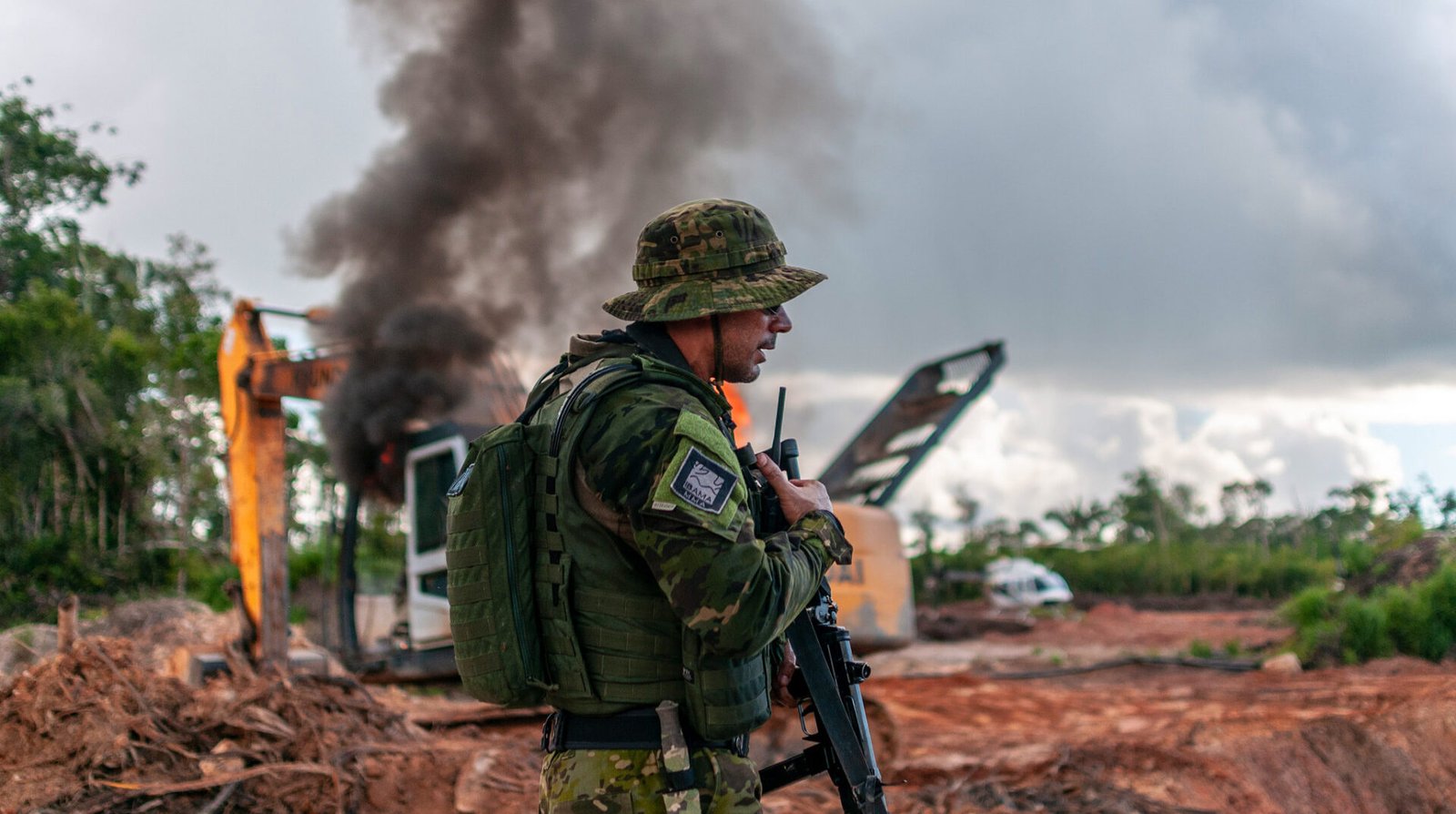
Land conflicts are rarely isolated phenomena. The study Amazon in Dispute, published by Oxfam Brasil, provides empirical evidence that the concentration of land disputes and territorial rights violations in municipalities of Pará and Maranhão coincides systematically with the worst outcomes in the basic human needs dimensions of the Brazilian Social Progress Index (IPS Brasil). This correlation points to a structural dynamic: the fragility of the institutional environment, marked by land grabbing, impunity and deficient land tenure regularization, not only enables violence but also reinforces social exclusion. Compounding this picture, the expansion of transport infrastructure into traditional and environmentally sensitive territories has functioned as a vector for intensifying conflicts, accelerating the penetration of the capital frontier into areas of high territorial vulnerability.
The overlap between conflict, insecurity and social deprivation identified by the study is not coincidental: it is causally intertwined. Where the State fails to guarantee territorial rights, armed actors and illicit markets fill the institutional vacuum, constraining access to services and protection mechanisms. Formal response instruments have equally struggled to address this complexity: the federal program for the protection of human rights defenders operates with significant structural limitations, including dependence on unstable state-level partnerships and civil society organizations, resulting in uneven and frequently insufficient responses in the face of the scale of territorial violence.
At the level of land governance, the study exposes a recurring paradox in the Amazonian context: relatively robust normative frameworks coexist with low implementation capacity. Weaknesses such as institutional fragmentation, limited cadastral analysis capacity and the improper use of the Rural Environmental Registry (CAR) in territories of traditional peoples and communities reveal that the effectiveness of territorial protection policies depends less on the existence of legal instruments and more on the strengthening of environmental governance and federal coordination. For risk analysis purposes, this pattern reinforces the need to treat institutional environment, security and social conditions as interdependent dimensions, a methodological prerequisite for territorial diagnostics to accurately reflect the complexity of the field.