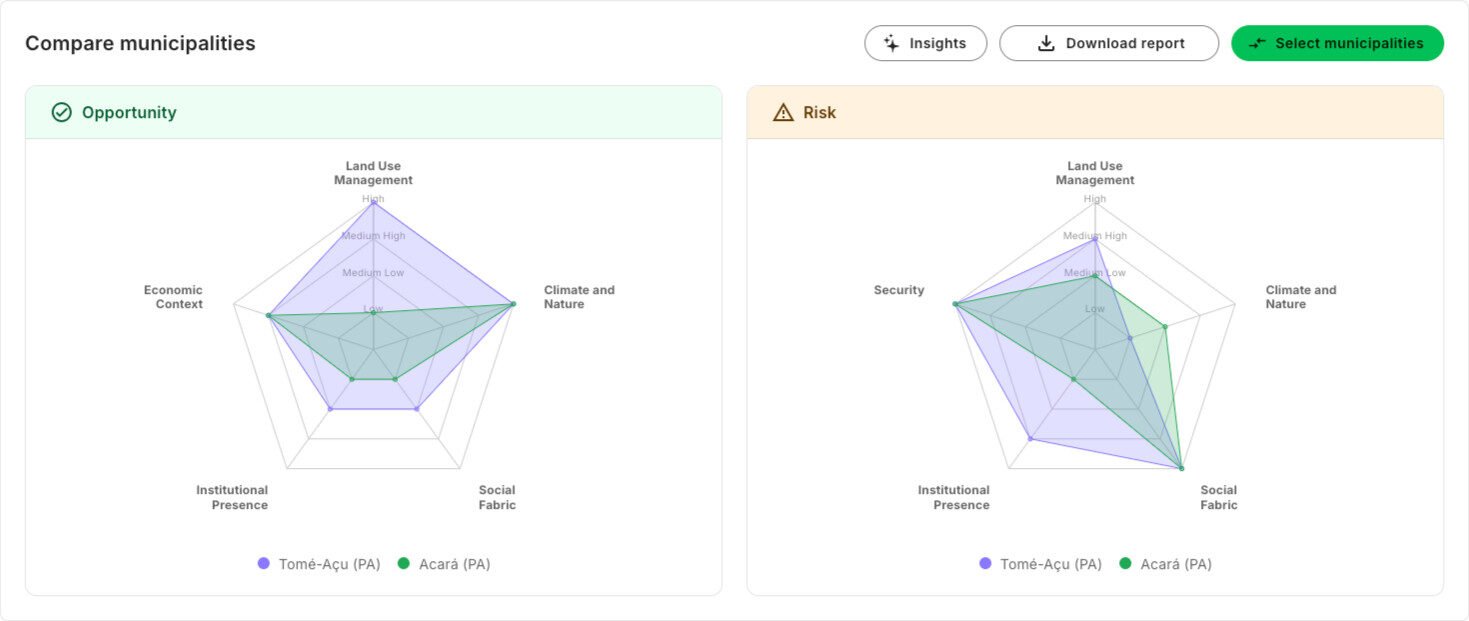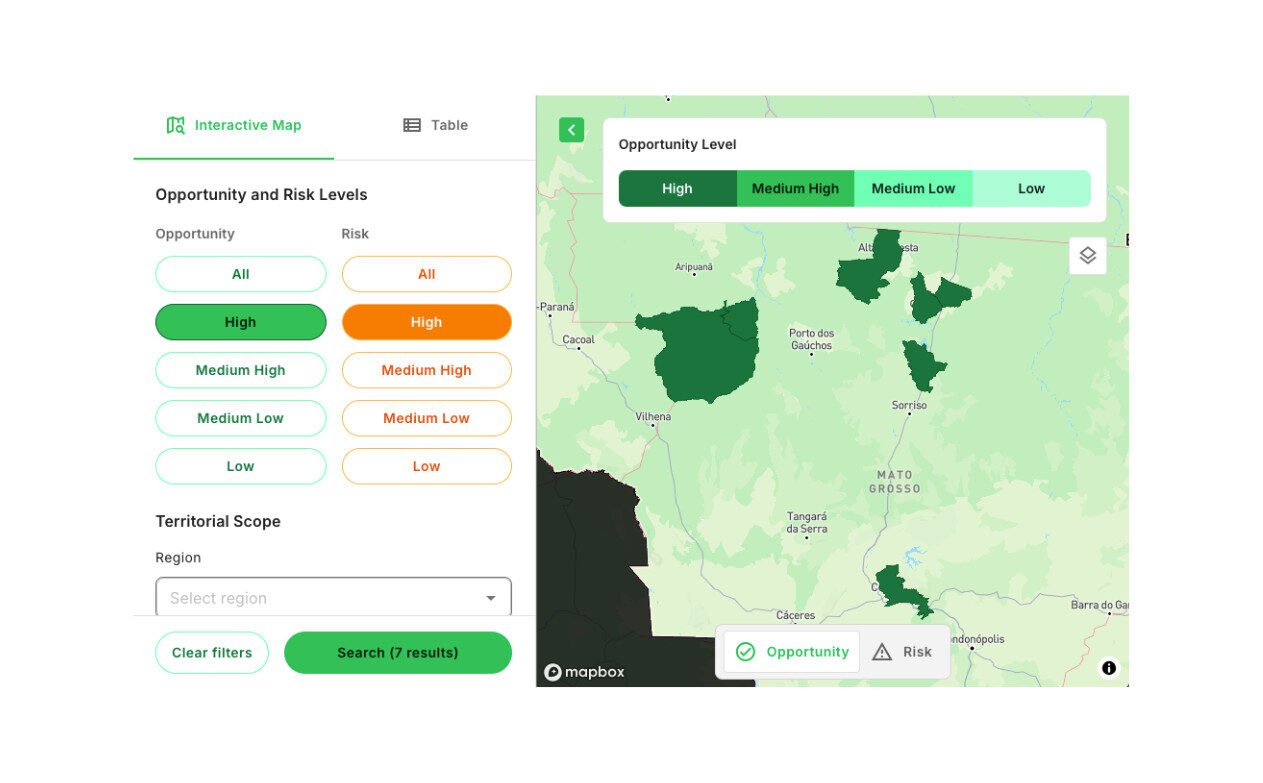
The KYT-e platform helps Nature-based Solutions (NbS) entrepreneurs locate relevant municipalities for establishing operations and better understand those where they already work.
In this example, a user sets filters to locate high-risk, high-opportunity municipalities in Mato Grosso.
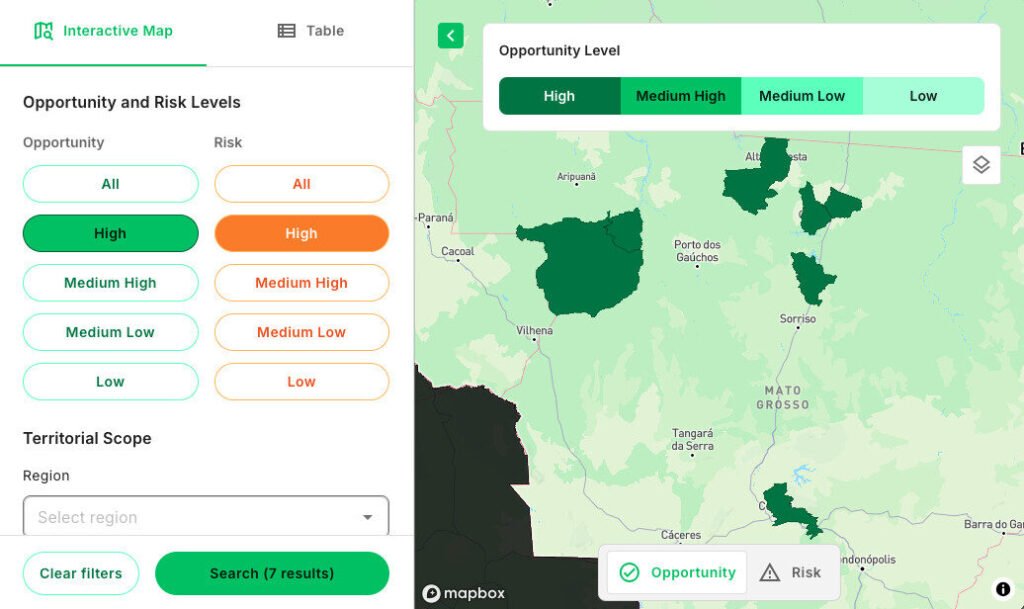
Toggling between the map and table views, the user identifies Alta Floresta as the municipality with the most relevant risk/opportunity profile and the most strategic location.
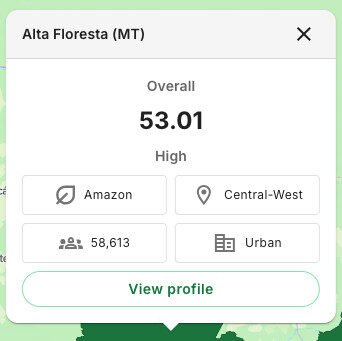
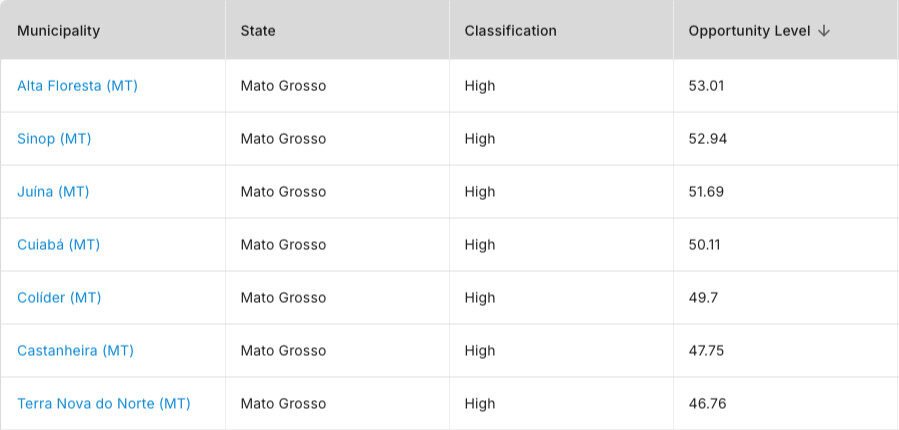
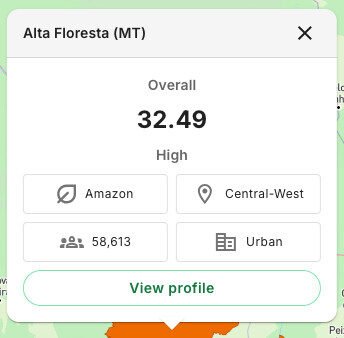
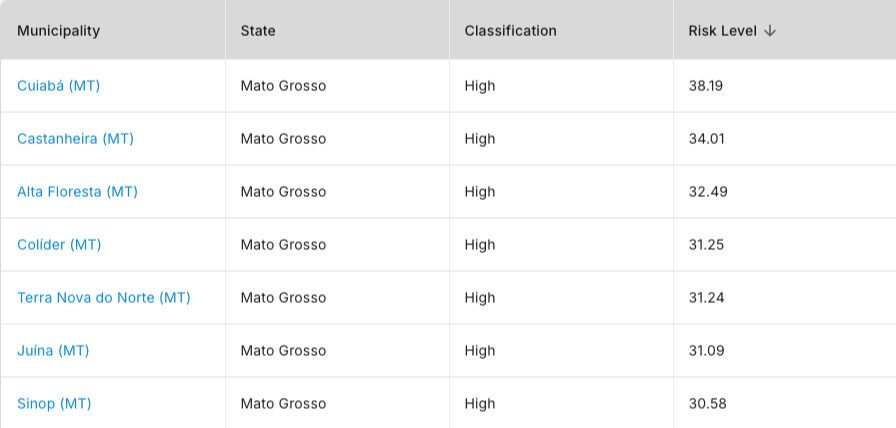
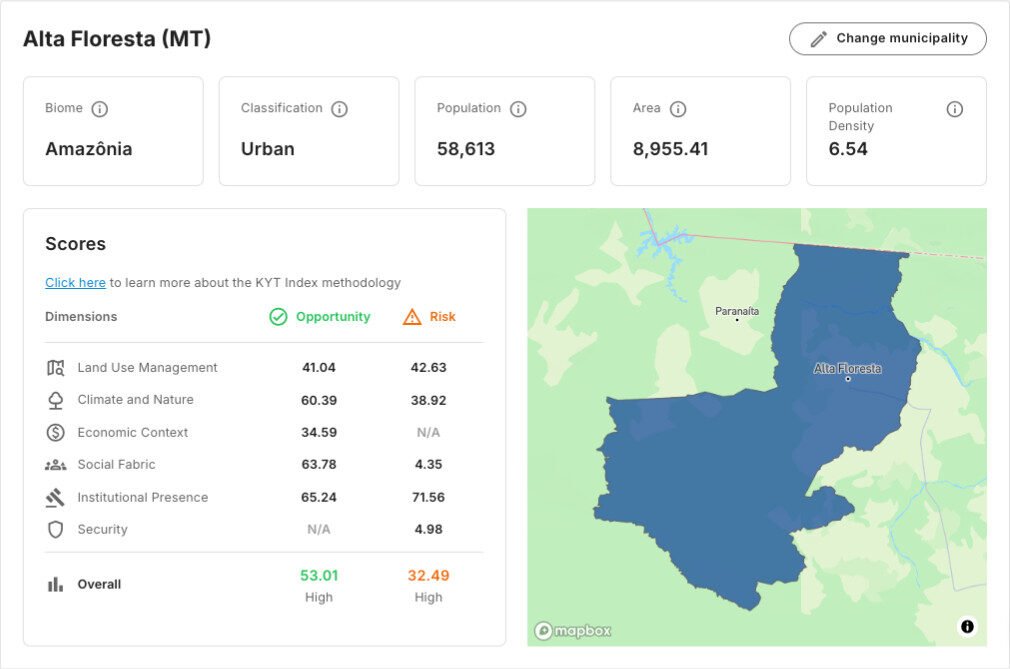
On the profile page for Alta Floresta, the Scores section helps the user quickly understand territorial risk and opportunity performance across the six dimensions of the KYT Index.
Focus on Nature-based Solutions
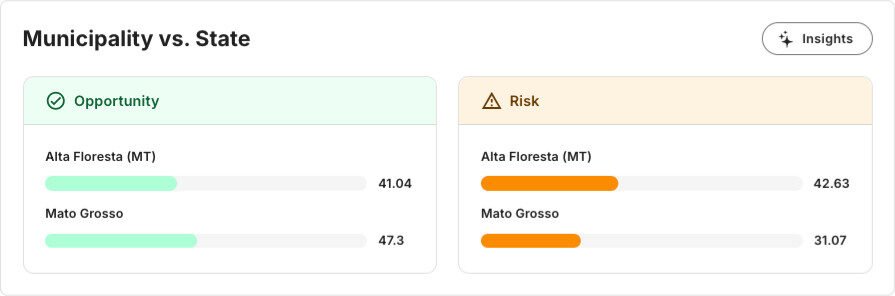
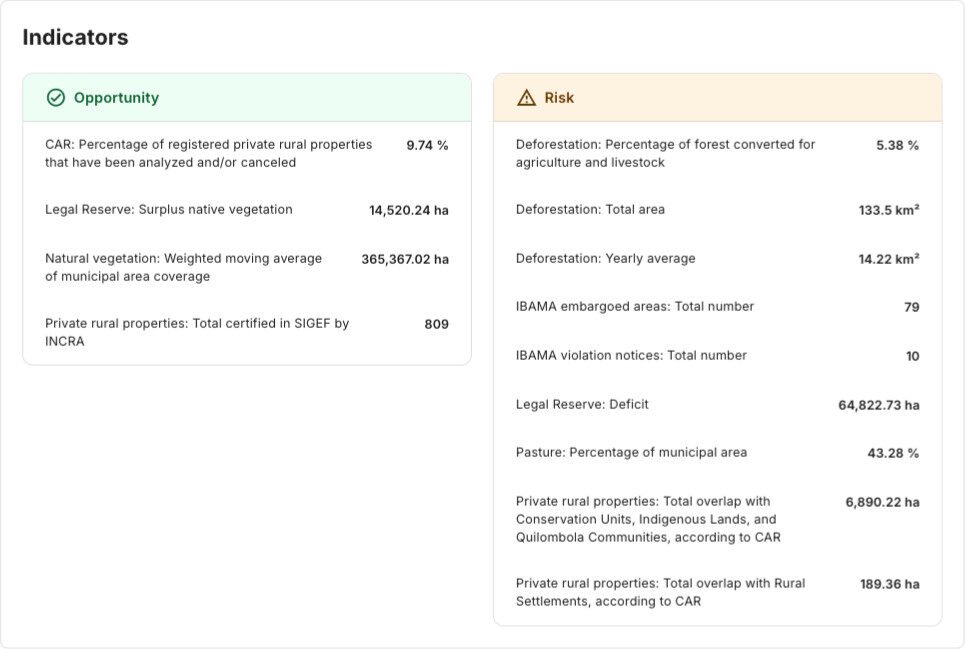
On the Land Use Management tab, the user sees that, while the municipal risk level is higher than state average, the opportunity level is lower. The list of indicators reveals a significant number of IBAMA embargoes and fines, which could reflect frequent noncompliance with regulations or recurring illegal activity. At the same time, a high number of SIGEF-certified rural properties indicates solid legal certainty regarding land ownership.
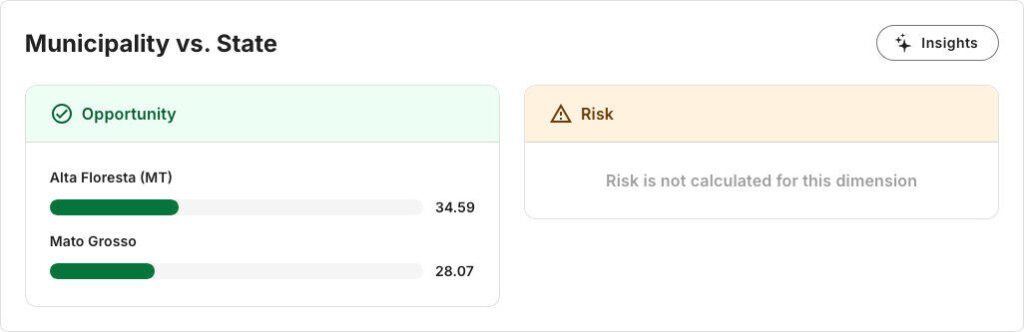
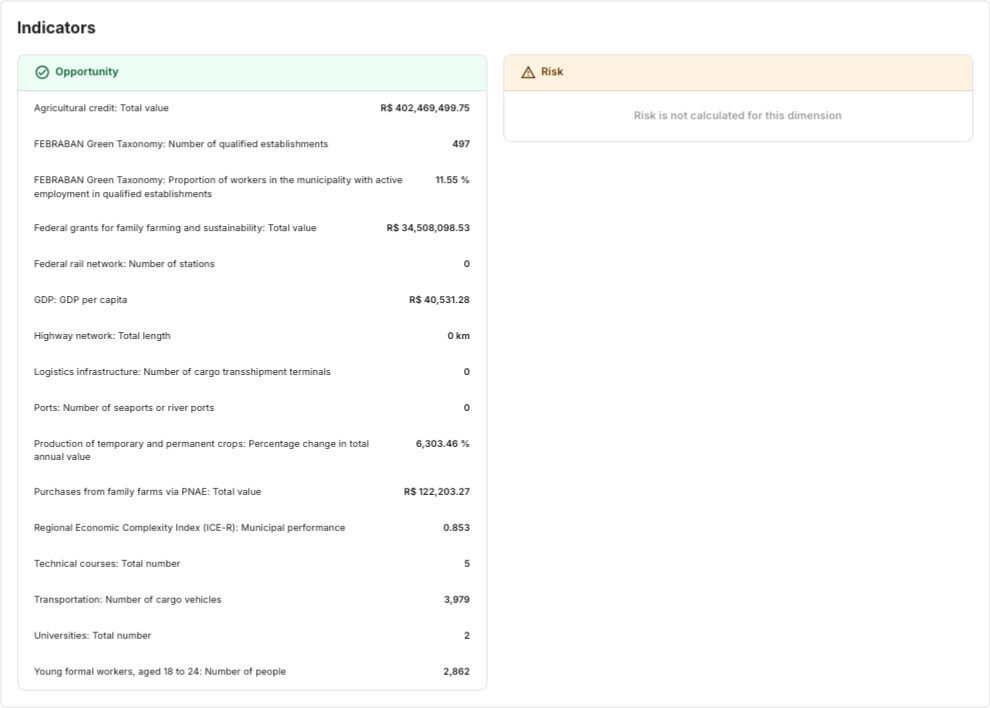
On the Economic Context tab, the user observes that municipal economic opportunity surpasses the state average. Robust growth in agricultural GDP, significant agricultural credit, and a considerable sum allocated to family farming signify substantial federal investment. With a large number of establishments aligned with the FEBRABAN green taxonomy and one in ten workers employed in this sector, Alta Floresta appears to host a promising green economy ecosystem. The per-capita GDP is roughly on par with the Brazilian average, but strong for a medium-sized municipality. The economic complexity score suggests diversified development across primary industries, manufacturing, and services, aligning with the high per capita GDP and the prevalence of green establishments.
For Climate and Nature, the user sees that municipal risk and opportunity levels are higher than the state averages. Indicators point to exposure to months of intense rainfall and recorded economic losses from disasters, but these signals should be interpreted in context. To date, losses are relatively modest, and the data indicate that the municipality’s hydrological regime is naturally wet. Given the predominantly flat terrain and soils with strong water‑retention capacity, much of this water likely tends to infiltrate the soil rather than generate widespread flooding, which tempers systemic ecological risk.
On the opportunity side, biophysical conditions actively favor reforestation: soils with good water‑holding capacity, over half the year with abundant and regular rainfall, and existing carbon stocks in native vegetation together support rapid natural vegetation growth and robust carbon sequestration. These natural assets strengthen the case for restoration and position the municipality to access carbon and broader ecosystem‑service markets.
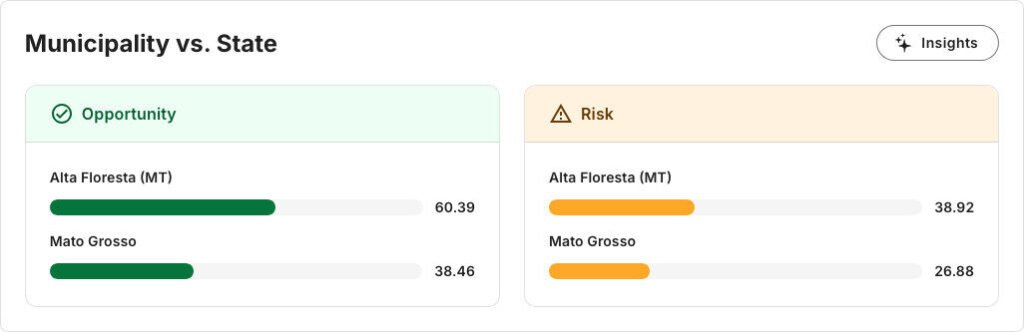
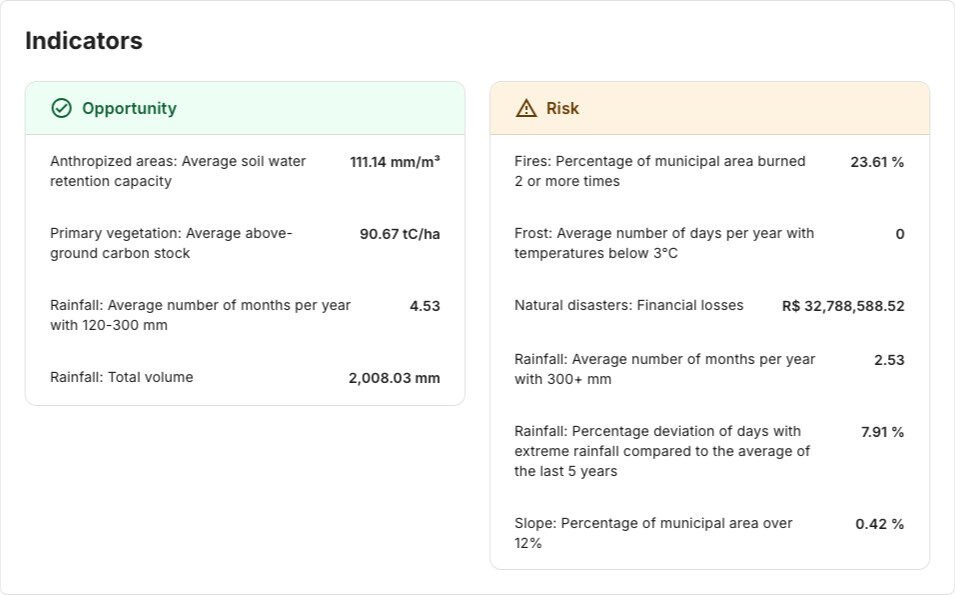
Taken together, the three dimensions depict Alta Floresta as having considerable NbS potential. That potential is already being converted into a dynamic and diversified economy that includes a growing green‑economy segment without being overly dependent on the primary sector. Strong agricultural performance and abundant native vegetation are bolstered by the soil’s favorable hydraulic properties, consistent rainfall, and substantial carbon stocks, establishing a solid foundation for scaling Nature-based Solutions.
From a Land Use Management perspective, agricultural expansion does place pressure on natural resources and there are instances of non‑compliance with environmental law. Even so, the municipality retains strong natural capital. Land‑tenure indicators also skew positive: a substantial share of properties are SIGEF-certified, and overlaps between private properties and protected areas represent a small fraction of the total municipal area.
Additional Factors
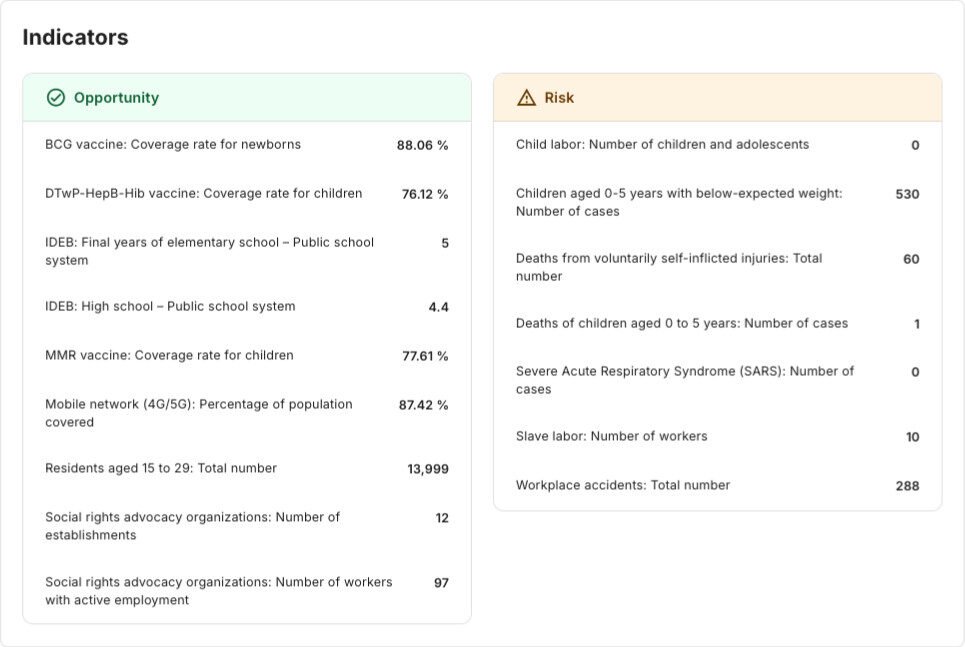
On the Social Fabric tab, the user sees that both risk and opportunity in Alta Floresta are higher than the Mato Grosso state average. The opportunities are underpinned by high cellular coverage that facilitates access to culture, education, information, and digital public services; strong population health metrics, with high vaccination rates and low incidence of acute respiratory illness; and mid‑range educational performance. A formalized civil society supports the defense of vulnerable groups and the prevention/remediation of social vulnerabilities. Demographically, roughly one quarter of residents are youth, indicating a relatively balanced age structure and potential for a demographic dividend.
At the same time, risk signals persist. A significant number of workplace accidents points to ongoing occupational hazards and gaps in prevention and enforcement. Elevated rates of underweight among children reveal nutritional vulnerability among low‑income households, even as infant mortality remains low. Reports of suicides suggest emerging mental‑health needs, albeit at low absolute levels.
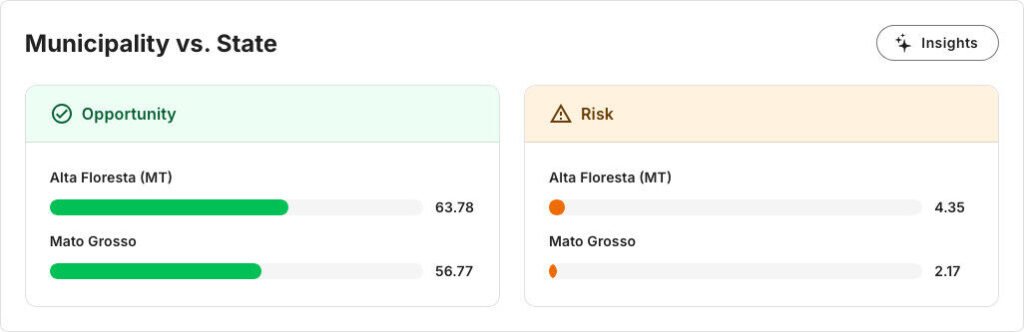
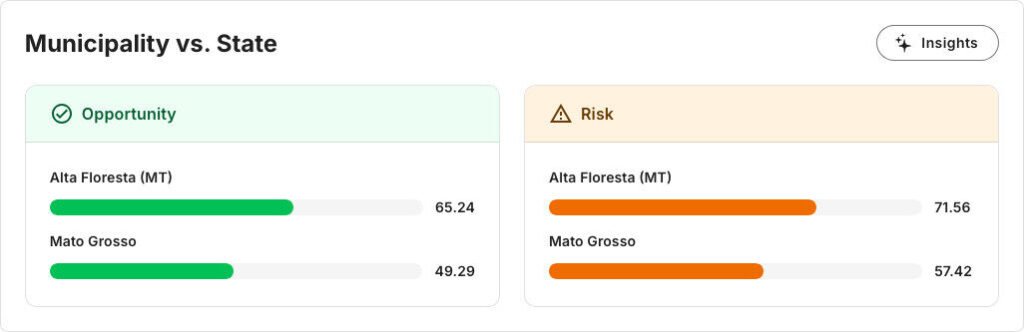
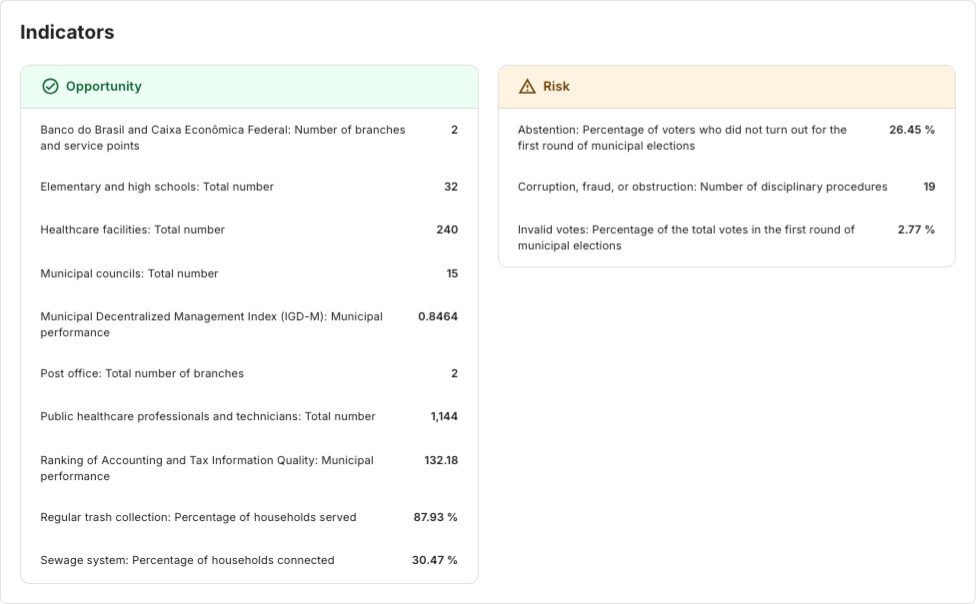
With respect to Institutional Presence, the user can quickly see strong opportunities in Alta Floresta, with solid scores on indices for social policy implementation, as well as transparency and fiscal responsibility. The presence of bank agencies and post offices ensures access to services and provides channels to enroll residents in income programs, worker support, and other public services. Education and health access are supported by an extensive network of schools and health establishments. From an urban sanitation standpoint, waste collection performs well, though sewer network coverage still has room for improvement.
On the risk side, elevated voter abstention may signal institutional distrust or political disengagement. The existence of disciplinary procedures for corruption, fraud and obstruction indicates some issues with internal controls and accountability that require attention.
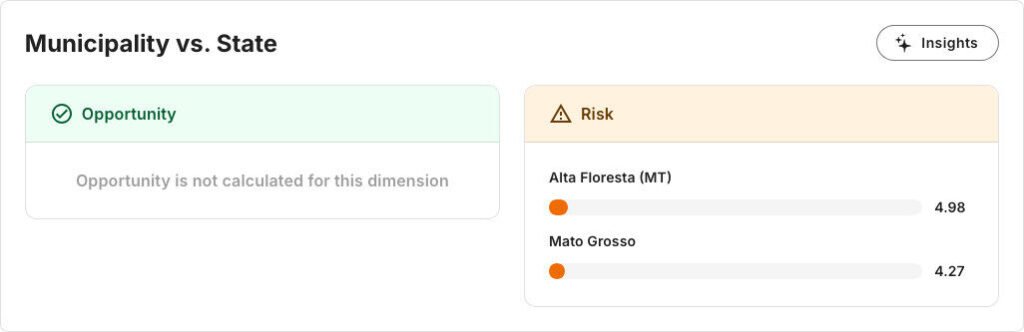
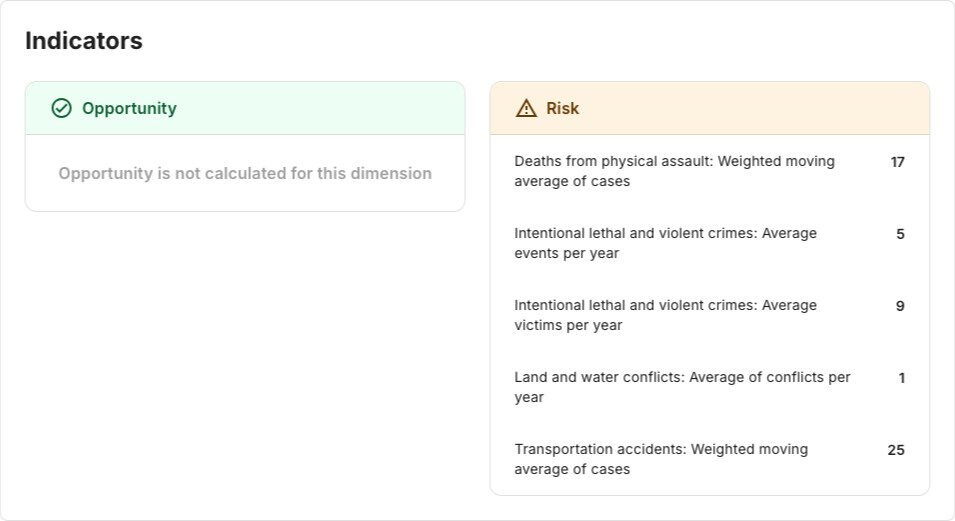
Regarding Security, the risk level in Alta Floresta is only marginally higher than the state average. Protests and political violence occur several times per year, and occasional land and water‑use conflicts also warrant attention. Transportation‑related deaths and violence indicators also merit closer investigation to pinpoint hotspots and drivers.
These three dimensions present the user with a mixed but actionable situation in Alta Floresta. Institutional Presence is strong and connects directly to social gains. At the same time, signs of civic disengagement and integrity concerns point to governance vulnerabilities, while some social indicators underscore persistent stressors. These institutional and social risks align with security considerations that involve protests, land and water‑use disputes and violence that can increase uncertainty for NbS entrepreneurs.
Ultimately, the user can use these insights to develop a risk management plan that leverages the municipality’s institutional strengths and social service platforms to contribute to an ecosystem of resilient green enterprises that enhance local socioeconomic conditions.
Click here to view the full profile for Alta Floresta in the KYT-e platform.