
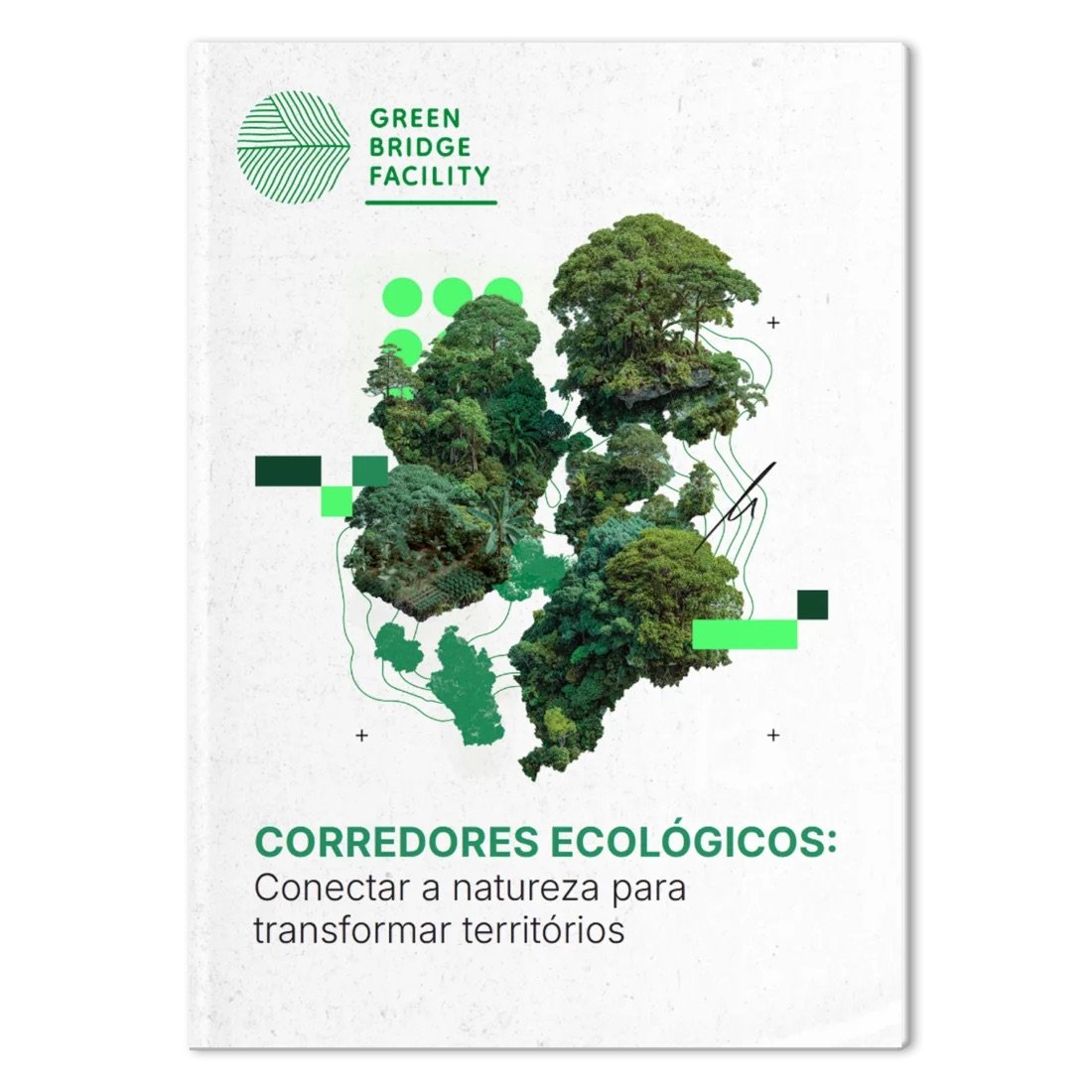
Ecological corridors guide
Brazil faces a critical challenge: restoring ecological connectivity across increasingly fragmented landscapes while meeting ambitious climate and biodiversity commitments. The country has pledged to restore 12 million hectares of native vegetation by 2030 and aims to connect 30 percent of its territory through ecological corridors. Yet protected areas remain isolated, threatening wildlife movement, genetic exchange, water regulation, and the resilience of ecosystems under a changing climate.
Ecological corridors provide a way to reconnect natural habitats while integrating conservation with sustainable land use and local development. They can link public and private protected areas, Indigenous lands, rural properties, and productive landscapes, supporting biodiversity and creating benefits for communities. By improving water availability, pollination, soil health, and climate resilience, well-planned corridors can also contribute to agricultural productivity and new economic opportunities.
However, drawing a corridor on a map is not enough. Land tenure disputes, illegal activities, social conflicts, institutional weaknesses, and competing economic interests can undermine even technically sound projects. Long-term success depends on understanding these territorial dynamics, engaging the people who live and work in the landscape, and building governance arrangements that distribute responsibilities and benefits fairly.
To address these challenges, the Green Bridge Facility developed the guide “Ecological Corridors: Connecting Nature to Transform Territories.” It brings together ecological connectivity science, adaptive governance, and the Green Bridge Facility’s Know Your Territory (KYT) approach to territorial opportunity and risk management. The methodology evaluates six interconnected dimensions: land use management, climate and nature, social fabric, economic context, institutional presence, and security. It offers a five-stage process covering initial definitions, integrated diagnosis, detailed planning, implementation, and monitoring.
Designed for public authorities, technical professionals, rural landowners, civil society organizations, and partners working on landscape restoration, the guide provides practical tools, examples, and monitoring indicators. It also explores compatible economic activities and opportunities for sustainable financing. Its central message is clear: ecological connectivity becomes more effective and durable when scientific knowledge is combined with territorial intelligence, local participation, and continuous learning, transforming conservation efforts into lasting opportunities for people and nature.
Read the guide